Why West Jordan Homeowners Need Year-Round Pest Control (Not Just One-Time Treatments)
If you live in West Jordan, you already know this city moves fast. New neighborhoods are going up along the Oquirrh Mountain foothills, families are moving in, and the community is growing at a pace that shows no signs of slowing. What many homeowners do not realize, however, is that this growth comes with an uninvited side effect: a steady, year-round surge in pest activity that a single spray or a seasonal treatment simply cannot keep up with.
Eyring Pest has seen this firsthand across the Salt Lake Valley. The pests showing up on West Jordan doorsteps are not random. They follow predictable patterns driven by local construction, geography, and the region's dramatic temperature swings. Understanding those patterns is the first step toward actually getting ahead of the problem.

Construction Boom = Pest Displacement
West Jordan's growth is exciting, but every time a new development breaks ground, it sends a shockwave through the underground ecosystem beneath it. Excavation disrupts soil, sewer lines, and older pipes, flushing out the pests that were quietly living there. Oriental cockroaches and rodents are pushed out of their habitats and immediately start searching for the nearest warm, sheltered structure. That structure is often your home.
Local exterminators across the Salt Lake Valley have reported a notable surge in cockroach and bed bug calls in recent years. The connection to high-density housing and increased neighborhood traffic is hard to ignore. If you live near an active construction site or moved into a newly developed West Jordan community in the past few years, you are statistically at greater risk for a sudden infestation than homeowners in more established areas.
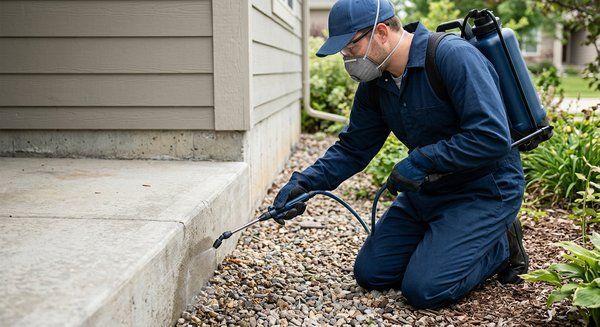
Proactive perimeter treatments create a chemical barrier around your foundation before displaced pests ever have the chance to move in. Waiting until you see a cockroach in your kitchen means the problem is already well established.
The Foothill Factor: How West Jordan's Geography Drives Pest Cycles
West Jordan sits in a genuinely unique geographic pocket, pressed between the Jordan River corridor and the rising terrain of the Oquirrh foothills. That position creates sharper, more dramatic seasonal temperature swings than you might experience in flatter parts of the valley, and pests respond to those swings on a predictable schedule.
- Spring and Summer: Early spring moisture draws ants and spiders out of the soil and toward the dry, shaded zones around residential foundations. Black widow spiders, which are venomous and genuinely common along the Wasatch Front, are a particular concern during this period. As summer heats up, standing water from backyard irrigation systems and poor yard drainage creates ideal breeding conditions for mosquitoes. Utah records West Nile Virus cases every summer season, and Salt Lake County has historically been among the more notable risk areas in the region.
- Fall and Winter: As cold air rolls down from the foothills in late August and September, rodents begin actively seeking shelter. This is not a slow migration; it happens quickly. A mouse only needs an opening the size of a dime (roughly 1/4 of an inch) to squeeze inside your walls. By the time temperatures drop noticeably, the entry points that went unaddressed all summer have already been found.
This seasonal cycle is exactly why one-time treatments fall short. The pest threat in West Jordan is not a single event. It is a rotating cast of species tied to temperature and moisture changes that occur throughout the entire calendar year.
Why DIY Sprays Often Make Things Worse
There is a tempting logic to grabbing a can of bug spray at the hardware store when you spot a trail of ants in your kitchen. The problem is that over-the-counter chemical sprays are a short-term solution that can actually scatter ant colonies and make the infestation harder to eliminate. Worse, repeated use of generic pesticides has contributed to resistance in common household pests. Bugs that survive a treatment pass that tolerance on to the next generation.
The pest control industry has largely shifted away from "spray and hope" approaches in favor of Integrated Pest Management, or IPM. IPM focuses on long-term prevention rather than repeated chemical applications. It combines an understanding of pest behavior, structural recommendations (like keeping mulch pulled back from your foundation and addressing moisture sources), and low-toxicity, pet-safe products applied only where they are actually needed.
For families with children or pets, this approach is not just more effective; it is genuinely safer.
A Smarter Approach to Pest Control West Jordan Homeowners Can Count On
The bottom line is straightforward: West Jordan's combination of active construction, unique geography, and intense seasonal shifts creates pest pressure that does not take a break. Effective protection means staying one step ahead of the seasonal calendar with foundation treatments in spring, mosquito and stinging insect control in summer, and rodent exclusion services before fall arrives.
Year-round plans tailored to this specific environment are not an upsell. They are the only approach that actually works in a city like West Jordan..
Frequently Asked Questions
When is the worst time of year for pests in West Jordan?
There is no single worst month, but pest pressure tends to spike in early spring (ants, spiders), peak summer (mosquitoes, wasps), and early fall (rodents seeking warmth). Each season brings a different set of threats, which is why year-round coverage is more effective than seasonal one-time treatments.
Are cockroaches actually common in West Jordan homes?
Yes. Oriental cockroaches in particular have become more common across the Salt Lake Valley as urban development pushes them out of underground habitats. Homes near construction zones or with older plumbing are at higher risk.
How quickly can rodents get into a home?
Very quickly. Mice can fit through an opening as small as 1/4 of an inch, about the size of a dime. As temperatures drop in early fall, they actively seek entry points, so exclusion work (sealing gaps and cracks) before cooler weather arrives is critical.
Is professional pest control safe for kids and pets?
When technicians use Integrated Pest Management methods, yes. IPM prioritizes low-toxicity, targeted treatments applied only where pests are active. This is significantly safer for households with children and pets than repeated use of harsh over-the-counter sprays.
Do I really need pest control if I have not seen any bugs yet?
Preventive treatment is actually the most cost-effective approach. By the time most homeowners see active pest activity, an infestation is already established. Routine perimeter treatments and seasonal checkups stop problems before they start.
Our Recent Articles